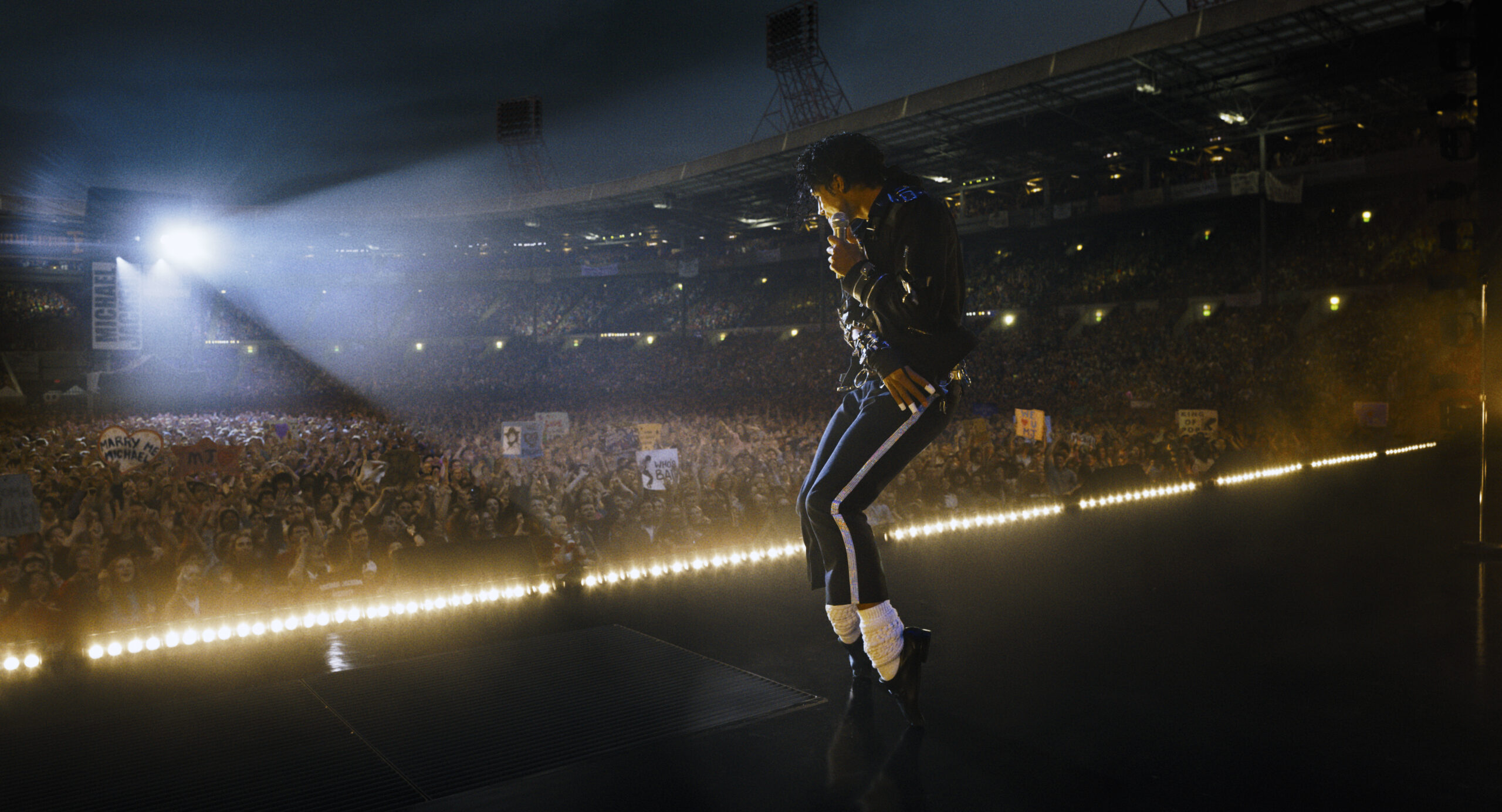
È possibile condensare i primi trent’anni di vita di Michael Jackson in un film di due ore? La risposta, naturalmente, è no.
Tuttavia, è possibile realizzare un film emozionante al punto giusto, trascinato da una colonna sonora esplosiva e sublimato da quel tocco di filamento di DNA Jackson che ha reso l’esperienza cinematografica più che credibile… anzi, forse inverosimile.
Si è proprio dal top che voglio iniziare. Si chiama Jaafar.
Jaafar Jackson, figlio di Jermaine Jackson dei Jackson Five, ci ha restituito un frammento di Michael
Quando lessi i primi rumors su un ipotetico biopic dedicato alle incredibili gesta di Michael Jackson, ho immediatamente storto il naso. Per me, quell’incredibile uomo di Gary, è più che un poster sulla parete della mia cameretta d’infanzia. È stato mentore ed ispirazione, capace di scendere da un manifesto, prendermi per mano e diventare parte della mia vita. Come fosse un membro della mia famiglia.
Ed è anche questo – oltre ad un indubbio talento alieno – che ha fatto scoppiare la Michaelmania di cui ho una perfetta memoria: la capacità di Michael di entrare in empatia con le persone. Il suo essere così accogliente, affascinante, misterioso, geniale. I suoi valori, la sua voce pacata in contrapposizione con il ritmo selvaggio del suo funky serrato e la sferzata graffiante del suo timbro vocale intriso di James Brown.
Così unico da far diventare qualsiasi imitazione una caricatura. Nessuno può indossare quei mocassini sgualciti da ore di Moonwalk. Eppure, quando la notizia di un certo Jaafar Jackson ha iniziato a circolare in rete, il mio scetticismo è diventato curiosità. Jaafar lo ricordavo bene: lo avevo visto in un video sul palco insieme al padre Jermaine cantare “The Christmas Song” ed avevo subito pensato a quanto il suo timbro fosse simile a quello dello zio. Poi, qualche anno dopo, il suo primo singolo “Got me singing”, con il quale mi aveva davvero conquistata. Un bel pezzo, ben prodotto e non scontato. Si, forse Jaafar aveva qualche chance.
Probabilmente è stato il mio basso livello di aspettativa a causarmi un momentaneo arresto cardiaco. Si. O forse era quella voce, quella inflessione, la pronuncia, il manierismo, le micro espressioni, il sorriso. Per un momento ho rivisto Michael. A tratti confusa nei blend fra il cantato di Michael e quello di Jaafar. Come ha fatto a confondermi? Riconoscerei Michael fra mille cantanti… ma Jaafar mi ha messa in crisi.
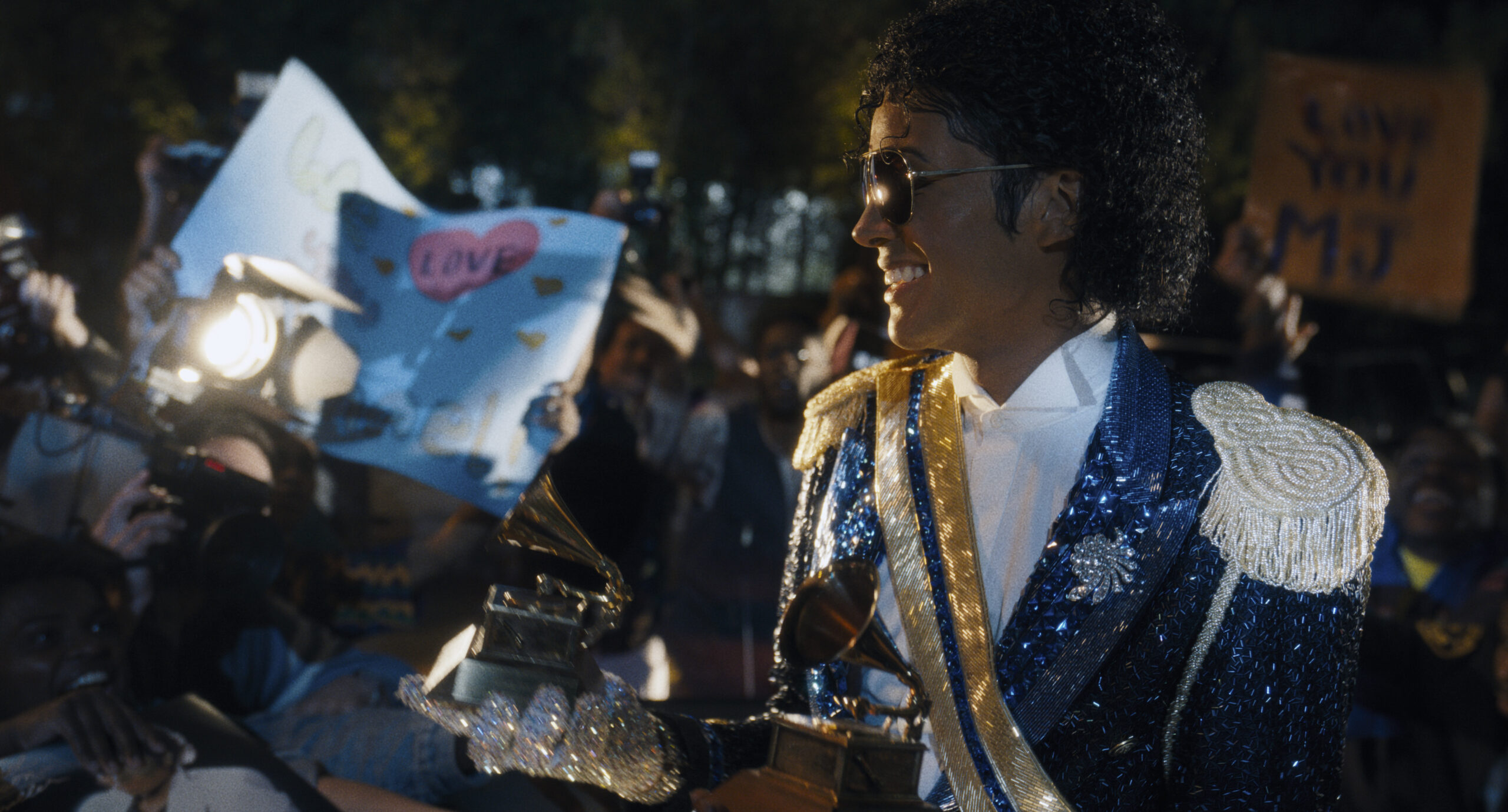
È per questo motivo che vi sconsiglio vivamente la visione doppiata in lingua italiana o qualsiasi altra lingua. Questo è un film che va visto in lingua originale. La voce di Jaafar costituisce l’85% della sua performance. Mentre tutti hanno occhi solo ai suoi piedi, io riesco a pensare esclusivamente alla sua voce. QUELLA voce. Un’inflessione che Michael ha costruito puntigliosamente per creare l’aura magica attorno alla sua persona. Si, perchè, come ha spiegato il grande Spike Lee, anche QUELLA voce era in realtà parte della sua illusione. Michael è sempre stato il burattinaio che muove le fila. Ha pensato nel dettaglio ad ogni mossa. Ogni aspetto della sua persona pubblica è stato dipinto da lui con l’accuratezza di uno dei pittori rinascimentali che tanto amava. Michael, per esempio, non affrontava mai le persone. Mandava qualcuno a farlo per lui. Non lo avresti mai visto dire qualcosa di sgradevole. Che furbacchione!
Michael Jackson è riuscito ad essere la persona più famosa al mondo ed anche la persona più inaccessibile al mondo. Non credo ci sia qualcuno, perfino nella sua cerchia ristretta o fra i suoi familiari, ad avere una visione d’insieme davvero intima e profonda della sua stupefacente personalità che spazia dal genio creativo all’uomo d’affari, fino al suo essere più spirituale capace di manifestare la sua coscienza e plasmare – così – la sua realtà. Jaafar ci ha restituito quello che Michael ha creato ad hoc per noi: l’archetipo del creativo puro di cuore. Innamorato della bellezza, degli animali, dell’amore, della musica, dei bambini. Questo non significa che lui abbia “finto”, semplicemente ha preferito lasciarci vedere quella parte di sè. La sua inaccessibilità, per esempio, sta anche nella scelta di indossare sempre gli occhiali da sole. Perchè? Perchè non voleva che le persone “guardassero dentro la sua anima”. Michael Jackson la sapeva davvero lunga.
Ho apprezzato la ricerca di un equilibrio fra il tormento e l’entusiasmo. Troppe volte il Re del Pop è stato raffigurato come un personaggio fragile, spezzato da un ingranaggio troppo opprimente. È stato bello vederlo sul grande schermo divertirsi, sorridere, creare, trasmettere leggerezza e allegria. È questa l’essenza di Michael Jackson. Certo, poi c’è stata anche la rabbia, l’umiliazione e la frustrazione… ma non è per questo che lo ricorderemo noi che abbiamo davvero compreso. Questo è ciò che i media vorrebbero che ricordassimo. Ma non è andata così. Loro hanno perso: Michael Jackson ha scalato la vetta fra mille ostacoli, e nessuno – dico nessuno – è stato capace di spostare il suo peso da lì sopra. Guanto e cappello compresi. Michael Jackson ha dominato l’ingranaggio, anche quando la morsa si è fatta piuttosto stretta.
Oltre le semplificazioni
Troppo semplicistico affibbiare a Michael Jackson aggettivi come “fragile, sensibile, tormentato, spezzato”. Manca una visione d’insieme. Immagina di essere un bambino di dieci anni con un immenso talento che viene catapultato nello showbusiness, allontanato dai coetanei e abusato ripetutamente. Immagina di crescere separato dai coetanei, nella paura di essere assalito da una folla di fans urlanti. Immagina di diventare un adolescente segnato dall’acne, con ogni insicurezza messa sotto la luce dei riflettori, oppresso dall’ansia di dover sempre essere perfetto. Immagina la pressione di essere un artista afroamericano – in un mondo ancora fortemente razzista – che sta cercando di evadere dal sistema di continuo sfruttamento dell’industria discografica. Immagina di ridefinire le regole del gioco e diventare l’uomo più famoso al mondo. Ogni tua parola viene distorta, ogni gesto osservato, ogni errore amplificato. Immagina la pressione e la responsabilità dell’intera famiglia, dell’industria, della stampa aguzzina, dell’opinione pubblica. Immagina di essere ingiustamente accusato del peggior crimine. Ed immagina… di dover comunque uscire lì fuori ad esibirti, a difenderti, a resistere. Lui era lì. Chi sta ancora parlando di fragilità? Michael Jackson è la rappresentazione di una forma di resistenza estrema, quasi disumana. Una capacità di rimanere in piedi mentre tutto crolla, continuando a creare, innovare e riscrivere la storia della musica. Il punto non è quanto fosse fragile. Il punto è quanto fosse straordinariamente FORTE.
La critica ridondante al biopic: il caso Chandler del 1993 ed il processo degli anni 2000
L’assenza nel biopic della cosiddetta “parte scomoda della storia” ha solleticato la stampa e sguinzagliato i leoni da tastiera sui social. Si, il film si ferma all’apogeo della carriera del Re del Pop: il Bad Tour del 1988. Non una scelta voluta, bensì obbligata: nonostante il cast avesse già girato intere sequenze dedicate alle accuse del 1993, il team legale si è visto costretto a non includere tale materiale a causa di un accordo di riservatezza stipulato negli anni ’90. La vicenda fra Michael Jackson e la famiglia Chandler di fatto non può essere rappresentata né citata in opere cinematografiche o contenuti pubblici. Non vi sono dubbi sul fatto che questa sia una parte rilevante della storia, anche se non necessariamente la più centrale. Affrontare un tema così delicato all’interno di un biopic rischierebbe di risultare riduttivo e poco utile. Questioni di questa portata richiedono contesto, documentazione, testimonianze. Tutti elementi che trovano la giusta collocazione in un documentario, dove è possibile prendersi lo spazio per i giusti approfondimenti.
Quasi sicuramente Michael avrà una seconda parte, nella quale sarà difficile evitare del tutto il riferimento a questa vicenda così intricata, anche se – con ogni probabilità – verrà trattata in una forma più sintetica e funzionale alla sceneggiatura.
Una sceneggiatura in corsa
Parlando di sceneggiatura emerge il punto più critico del film: la sensazione costante che tutto corra estremamente veloce. Un ritmo serrato al limite dell’affanno tra salti temporali, semplificazioni, omissioni ed una certa superficialità spalmata sopra ogni evento rilevante. Il risultato è una sintesi estrema, un riassunto del riassunto. Del resto, la vita di Michael Jackson è fuori scala: dieci anni del suo vissuto, corrispondono a cinquant’anni di un essere umano qualsiasi. Ma è proprio la complessità di questa vita ad esigere più respiro, più tempo, più profondità. Trovare una formula narrativa diversa dalla classica cronologia avrebbe aiutato. Michael Jackson è famoso per essere stato un pioniere. L’opera del regista Antoine Fuqua non è altrettanto avanguardista. Questa narrazione rapida e didascalica non consente la costruzione di una vera trama. Le sequenze si susseguono senza sedimentare, i passaggi emotivi rimangono accennati, i personaggi appena sfiorati e non esplorati. Non c’è conflitto, non c’è stratificazione, non c’è dinamica fra i personaggi. Non hai il tempo di comprendere bene uno scenario e sei già catapultato a quello successivo e – soprattutto – non riesci ad entrare dentro la mente del protagonista, di coglierne sfumature, contraddizioni, tensioni, eccitazioni. È una successione di eventi iconici che continui a guardare da lontano.
La cosa che mi ha fatta arrabbiare di questo film è stata la volontà di non voler correre neanche un rischio. Una cosa che Michael Jackson, invece, ha sempre fatto nella sua vita. È stata l’alta percentuale di rischio a rendere le sue opere tanto monumentali. E se guardiamo al suo lavoro in toto, notiamo subito che le opere minori sono state quelle in cui non ha voluto rischiare tanto ed è rimasto nella sua comfort zone.
Baz Luhrmann ha corso un rischio con “Elvis”. A partire dalla sua firma estetica barocca, fino ai mesh up fra la vecchia Memphis black che si scontra con l’hip pop del ghetto. Nonostante la ricostruzione della vita del Re del Rock’n’Roll sia estremamente romanzata, Luhrmann è riuscito a dare carattere alla sua storia, ad offrire un punto di vista ed a creare una vera dinamica fra i personaggi.
Fuqua si è mosso su un terreno apparentemente sicuro, costruendo un ritratto pulito e levigato, ancorato a una narrazione ufficiale che non viene mai realmente messa in discussione, ovvero quella della famiglia Jackson. Un punto di vista definito, direi blindato, sostenuto da un’estetica impeccabile e da una colonna sonora straordinaria che regge più della metà dell’impianto emotivo del film. Il restante 40% lo ha fatto Jaafar con la sua voce e la sua interpretazione potente. Ed è proprio questo il grande bluff: con una performance come la sua si sarebbe potuti andare davvero molto oltre. Così il film finisce per sprecare l’opportunità di trasformarsi in un’opera davvero memorabile, ma sono certa che l’obiettivo fosse proprio questo: restare in una zona sicura, pensata per il grande pubblico e capace di sbancare al botteghino. Ci voleva un approccio leggero che potesse invogliare anche i non appassionati. Un film che fa sorridere piuttosto che riflettere. Un film da vedere con tutta la famiglia, dove Michael Jackson è etereo, a tratti divertente e – ovviamente – asessuato.
Paris Jackson: “È Hollywood. Non è pensato per essere completamente accurato, ma per intrattenere. Piacerà ai fans che vivono nella fantasia”.
Queste le parole crude e indubbiamente veritiere di Paris Jackson, figlia di Michael Jackson, che ha pubblicato alcune storie Instagram al riguardo negli scorsi mesi. Brutalmente onesta. Parole che hanno diviso l’opinione pubblica a metà fra detrattori e sostenitori. A differenza dei due fratelli, Paris non ha preso parte né alla produzione del film, tantomeno alle première cinematografiche. Dopo la visione ho compreso ancora di più il suo punto di vista, ma allo stesso tempo non riesco a disprezzarne in toto la produzione. Semplicemente: basta andare al cinema consapevoli che si tratta solo di un film. Non è un evento iconico. Non è un evento generazionale. Quelli li ha firmati Michael Jackson di suo pugno.
La magia sta in ciò che è reale
Permettetemi di dire qualcosa che vi farà arrabbiare o vi provocherà una risata: la ricostruzione del palco non ha magia. La casa di Encino, si. Il film è principalmente ambientato a Hayvenhurst, la residenza della famiglia Jackson in cui Michael ha vissuto dal 1971 fino alla fine degli anni ’80, prima di trasferirsi a Neverland. Personalmente era la cosa che più di qualsiasi altra aspettavo di vedere: volevo attraversare quel cancello ed entrare dentro la camera disordinata di Michael, percorrere il giardino e vedere il suo adorabile lama Louie. Scendere con lui la scaletta a chioccola del suo studio privato. Ho sempre sognato quel posto, probabilmente più di Neverland stessa. È stato il luogo nel quale ha scritto le sue opere più ispirate e realizzato le pre-produzioni più importanti della sua carriera. Il luogo in cui da enfant prodige di Gary è diventato il Re del Pop. Un luogo che è rimasto puro e non macchiato dalle perquisizioni dell’FBI. Un luogo plasmato dalla sua mano ed intriso dei suoi sogni e delle sue ambizioni. Neverland rappresenta il suo regno, ma Hayvenhurst è il suo sogno. Non ha bisogno di un set: è già tutto lì.
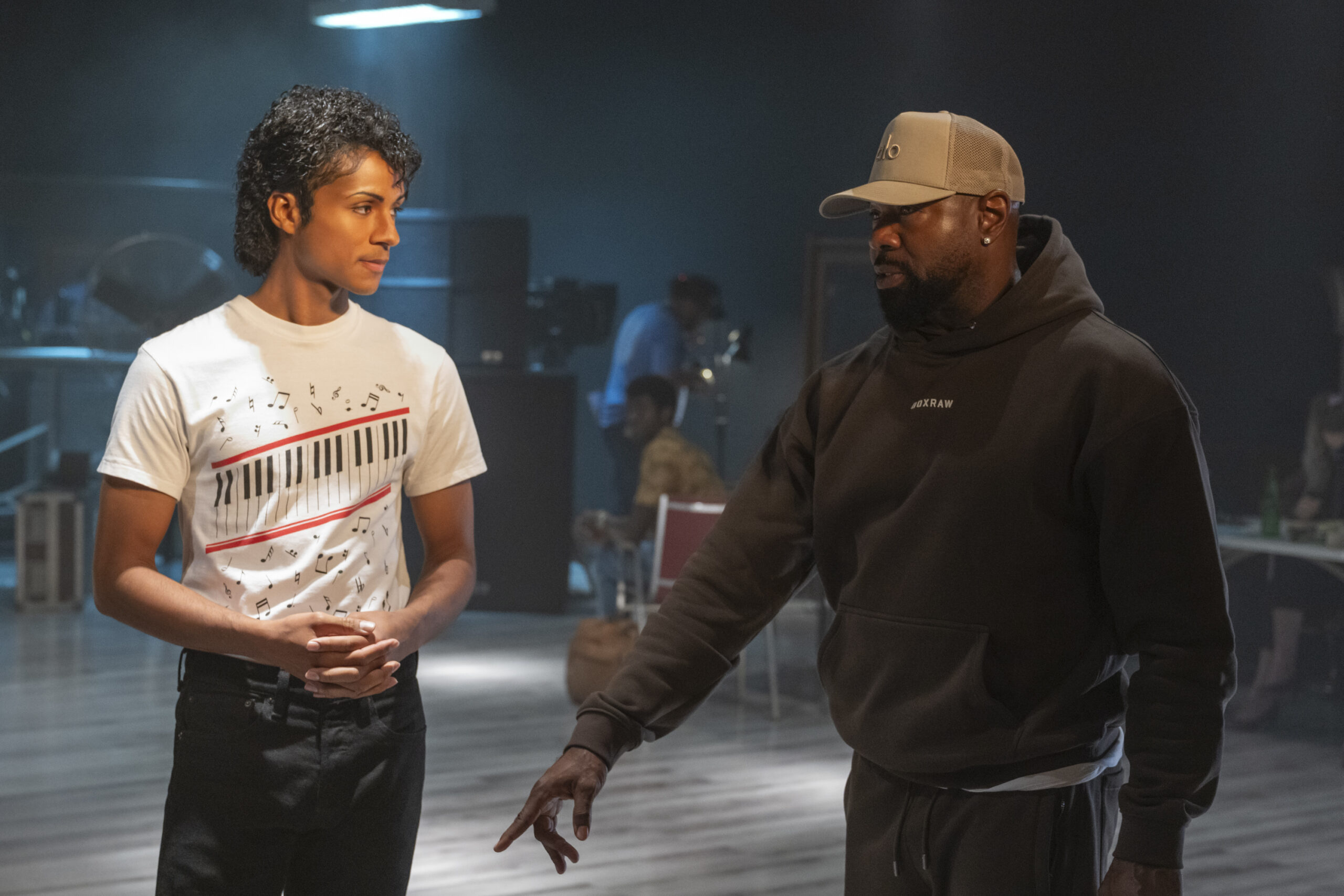
Troppo artefatte, invece, le immagini dei concerti. Con palchi che sembrano fin troppo moderni e contemporanei rispetto alla realtà di cui abbiamo testimonianza. Perfino la sequenza dedicata al cortometraggio di Thriller, per quanto meticolosa (girata nella location originale), non riesce a catturare la vibe di John Landis. Sarò troppo puntigliosa e rompiscatole, ma il set di Beat it è troppo “pulito” e contemporaneo rispetto alla “polvere” ed al “lerciume” del video originale. Anche i fans non sembrano abbastanza agitati. Basta guardare un video dell’epoca per percepirlo. Davanti Michael Jackson le persone avevano delle reazioni da reparto psichiatrico. Qui vediamo una folla esultante fin troppo composta. Perfino gli svenimenti sono composti. I filmati di Michael Jackson in mezzo ai suoi fans, in realtà, sono al limite con l’inquietante. Le ragazzine agitate davanti ai Beatles sembrano delle sobrie dilettanti rispetto al pubblico di Michael Jackson. Unico artista capace di portare all’isterismo donne, uomini, madri, padri, figli… e probabilmente anche nonne e nonni, attraversando le generazioni in modo trasversale senza difficoltà e senza limitazioni di razza, ceto, sesso, religione o schieramento politico. Quando si dice “unire i popoli”.
La vera magia
Michael Jackson è personificazione del concetto di magia. Un uomo costantemente in bilico fra l’Iperuranio ed il pianeta Terra, capace di far crollare le tue difese con un semplice gesto. Sapete da cosa l’ho capito? Dal fatto che il momento più emozionante da vedere sullo schermo è stato rivedere il video-logo dell’epoca con i suoi piedi che vanno sulle punte posto all’inizio della pellicola. È semplice, ma è incredibilmente potente. Questo film non poteva contenere la sua magia, perchè lui non è contenibile. Non è sintetizzabile. Ma non è il film ad essere sbagliato o fatto male… è semplicemente lui ad essere troppo, troppo grande.
Michael Jackson beyond “Michael”: when reality surpasses any narrative
Between the surprising performance of Jaafar Jackson and a cautious narration, the film by Antoine Fuqua gives back the myth without managing to contain it.
Is it possible to condense the first thirty years of Michael Jackson’s life into a two-hour film? The answer, naturally, is no.
However, it is possible to create a film that is emotional at the right point, driven by an explosive soundtrack and sublimated by that touch of Jackson DNA filament that has made the cinematic experience more than credible… indeed, perhaps improbable.
It is precisely from the top that I want to begin. His name is Jaafar.
Jaafar Jackson, son of Jermaine Jackson of the Jackson Five, has given us back a fragment of Michael.
When I read the first rumors about a hypothetical biopic dedicated to the incredible feats of Michael Jackson, I immediately turned up my nose. For me, that incredible man from Gary is more than a poster on the wall of my childhood bedroom. He has been a mentor and an inspiration, capable of stepping down from an image, taking me by the hand and becoming part of my life. As if he were a member of my family.
And it is also this — beyond an undeniable alien talent — that made the Michaelmania explode of which I have a perfect memory: Michael’s ability to enter into empathy with people. His being so welcoming, fascinating, mysterious, genial. His values, his composed voice in contrast with the wild rhythm of his tight funky and the scratching lash of his vocal timbre imbued with James Brown.
So unique as to make any imitation become a caricature. No one can wear those worn-out loafers from hours of Moonwalk. And yet, when the news of a certain Jaafar Jackson began to circulate online, my skepticism became curiosity. I remembered Jaafar well: I had seen him in a video on stage together with his father Jermaine singing “The Christmas Song” and I had immediately thought about how similar his timbre was to that of his uncle. Then, a few years later, his first single “Got Me Singing”, with which he had really conquered me. A beautiful piece, well produced and not obvious. Yes, perhaps Jaafar had some chance.
Probably it was my low level of expectation that caused me a momentary cardiac arrest. Yes. Or maybe it was that voice, that inflection, the pronunciation, the mannerism, the micro expressions, the smile. For a moment I saw Michael again. At times confused in the blends between Michael’s singing and Jaafar’s. How did he manage to confuse me? I would recognize Michael among a thousand singers… but Jaafar put me in crisis.
It is for this reason that I strongly advise against watching it dubbed in Italian or any other language. This is a film that must be seen in the original language. Jaafar’s voice constitutes 85% of his performance. While everyone has eyes only for his feet, I manage to think exclusively about his voice. THAT voice. An inflection that Michael constructed meticulously to create the magical aura around his person. Yes, because, as the great Spike Lee explained, even THAT voice was in reality part of his illusion. Michael has always been the puppeteer who pulls the strings. He thought in detail about every move. Every aspect of his public persona was painted by him with the accuracy of one of the Renaissance painters that he loved so much. Michael, for example, never faced people. He sent someone to do it for him. You would never have seen him say something unpleasant. What a sly one!
Michael Jackson managed to be the most famous person in the world and also the most inaccessible person in the world. I don’t believe there is anyone, even within his closest circle or among his family members, who has a truly intimate and deep overall understanding of his astonishing personality, which ranges from creative genius to businessman, all the way to his more spiritual nature, capable of manifesting his consciousness and thus shaping his reality. Jaafar has given us back what Michael created ad hoc for us: the archetype of the pure-hearted creative. In love with beauty, animals, love, music, children. This does not mean that he “pretended”, he simply preferred to let us see that part of himself. His inaccessibility, for example, also lies in the choice of always wearing sunglasses. Why? Because he did not want people to “look inside his soul”. Michael Jackson really knew a lot.
I appreciated the search for a balance between torment and enthusiasm. Too many times the King of Pop has been portrayed as a fragile character, broken by an overly oppressive mechanism. It was beautiful to see him on the big screen having fun, smiling, creating, transmitting lightness and joy. This is the essence of Michael Jackson. Of course, then there was also anger, humiliation and frustration… but it is not for this that we who have truly understood will remember him. This is what the media would like us to remember. But it did not go like this. They lost: Michael Jackson climbed the summit among a thousand obstacles, and no one — I say no one — has been able to move his weight from up there. Glove and hat included. Michael Jackson dominated the mechanism, even when the grip became rather tight.
Beyond simplifications
It is too simplistic to attribute to Michael Jackson adjectives such as “fragile, sensitive, tormented, broken”. A general vision is missing. Imagine being a ten-year-old child with an immense talent who is catapulted into show business, separated from peers and repeatedly abused. Imagine growing up separated from peers, in the fear of being assaulted by a crowd of screaming fans. Imagine becoming a teenager marked by acne, with every insecurity placed under the light of the spotlights, oppressed by the anxiety of always having to be perfect. Imagine the pressure of being an African American artist — in a world still strongly racist — who is trying to escape from the system of continuous exploitation of the music industry. Imagine redefining the rules of the game and becoming the most famous man in the world. Every word is distorted, every gesture observed, every mistake amplified. Imagine the pressure and the responsibility of the entire family, of the industry, of the predatory press, of public opinion. Imagine being unjustly accused of the worst crime. And imagine… still having to go out there to perform, to defend yourself, to resist. He was there. Who is still talking about fragility? Michael Jackson is the representation of a form of extreme resistance, almost inhuman. An ability to remain standing while everything collapses, continuing to create, innovate and rewrite the history of music. The point is not how fragile he was. The point is how extraordinarily STRONG he was.
The redundant criticism of the biopic: the Chandler case of 1993 and the trial of the 2000s
The absence in the biopic of the so-called “uncomfortable part of the story” has tickled the press and unleashed keyboard warriors on social media. Yes, the film stops at the peak of the career of the King of Pop: the Bad Tour of 1988. Not a desired choice, but a forced one: despite the cast having already filmed entire sequences dedicated to the accusations of 1993, the legal team was forced not to include such material due to a confidentiality agreement stipulated in the 1990s. The matter between Michael Jackson and the Chandler family in fact cannot be represented nor cited in cinematographic works or other types of public content. There are no doubts about the fact that this is a relevant part of the story, even if not necessarily the most central one. Addressing such delicate and complex themes within a musical biopic risks being reductive and not very useful. Matters of this magnitude require context, documentation, testimonies. All elements that find their proper place in a documentary, where it is possible to take the space for the right in-depth analysis.
Almost certainly Michael will have a second part, in which it will be difficult to completely avoid reference to this intricate matter, even if — most likely — it will be treated in a more synthetic and functional form for the screenplay.
A screenplay in a rush
Speaking of screenplay, the most critical point of the film emerges: the constant sensation that everything runs extremely fast. A tight rhythm at the limit of breathlessness between time jumps, simplifications, omissions and a certain superficiality spread over every relevant event. The result is an extreme synthesis, a summary of the summary. After all, the life of Michael Jackson is out of scale: ten years of his life correspond to fifty years of an ordinary human being. But it is precisely the complexity of this life that requires more breath, more time, more depth. Finding a narrative formula different from the classic chronology would have helped. Michael Jackson is famous for having been a pioneer. The work of Antoine Fuqua is not equally avant-garde. This rapid and didactic narration does not allow the construction of a real plot. The sequences follow one another without settling, the emotional passages remain hinted at, the characters barely touched and not explored. There is no conflict, there is no stratification, there is no dynamic between the characters. You do not have time to fully understand a scenario and you are already catapulted into the next one and — above all — you do not manage to enter inside the mind of the protagonist, to grasp nuances, contradictions, tensions, excitations. It is a succession of iconic events that you continue to watch from afar.
The thing that made me angry about this film was the will not to take even a single risk. Something that Michael Jackson, instead, has always done in his life. It was the high percentage of risk that made his works so monumental. And if we look at his work as a whole, we immediately notice that the minor works were those in which he did not want to risk too much and remained in his comfort zone.
Baz Luhrmann took a risk with “Elvis”. Starting from his baroque aesthetic signature, up to the mash-ups between old Memphis black and the hip hop of the ghetto. Despite the reconstruction of the life of the King of Rock’n’Roll being extremely fictionalized, Luhrmann managed to give character to his story, to offer a point of view and to create a real dynamic between the characters.
Fuqua moved on an apparently safe ground, building a clean and polished portrait, anchored to an official narration that is never really questioned, namely that of the Jackson family. A defined point of view, I would say sealed, supported by an impeccable aesthetic and by an extraordinary soundtrack that holds more than half of the emotional structure of the film. The remaining 40% was done by Jaafar with his voice and his powerful interpretation. And this is precisely the great bluff: with a performance like his one could have really gone much further. Thus the film ends up wasting the opportunity to transform itself into a truly memorable work, but I am sure that the objective was precisely this: to remain in a safe zone, designed for the general public and capable of breaking the box office. A light approach was needed to attract even non-enthusiasts. A film that makes you smile rather than reflect. A film to watch with the whole family, where Michael Jackson is ethereal, at times amusing and — obviously — asexual.
Paris Jackson: “It’s Hollywood. It’s not meant to be completely accurate, but to entertain. It will appeal to fans who live in fantasy.”
These are the raw and undoubtedly truthful words of Paris Jackson, daughter of Michael Jackson, who published some Instagram stories about it in recent months. Brutally honest. Words that have divided public opinion in half between detractors and supporters. Unlike her two brothers, Paris did not take part in the production of the film, nor in the cinematic premieres. After the viewing, I understood even more her point of view, but at the same time I cannot completely despise the production. Simply: it is enough to go to the cinema aware that it is only a film. It is not an iconic event. It is not a generational event. Those were signed by Michael Jackson with his own hand.
The magic lies in what is real
Allow me to say something that will make you angry or provoke a laugh: the reconstruction of the stage has no magic. The Encino house got the magic. The film is mainly set in Hayvenhurst, the residence of the Jackson family in which Michael lived from 1971 until the end of the 1980s, before moving to Neverland. Personally, it was the thing that more than any other I was waiting to see: I wanted to cross that gate and enter into Michael’s messy room, walk through the garden and see his adorable llama Louie. Go down with him the spiral staircase of his private studio. I have always dreamed of that place, probably more than Neverland itself. It was the place in which he wrote his most inspired works and realized the most important pre-productions of his career. The place in which, from enfant prodige of Gary, he became the King of Pop. A place that remained pure and not stained by the FBI searches. A place shaped by his hand and soaked with his dreams and his ambitions. Neverland represents his kingdom, but Hayvenhurst is his dream. It does not need a set: everything is already there.
Too artificial, instead, are the images of the concerts. With stages that seem far too modern and contemporary compared to the reality of which we have testimony. Even the sequence dedicated to the short film of Thriller, although meticulous (shot in the original location), does not manage to capture the vibe of John Landis. I may be too picky and annoying, but the set of Beat It is too “clean” and contemporary compared to the “dust” and the “filth” of the original video. Even the fans do not seem agitated enough. It is enough to watch a video of the time to perceive it. In front of Michael Jackson, people had reactions like in a psychiatric ward. Here we see an exultant crowd far too composed. Even the faintings are composed. The footage of Michael Jackson among his fans, in reality, is on the edge of the disturbing. The girls agitated in front of the Beatles seem sober amateurs compared to Michael Jackson’s audience. The only artist capable of bringing to hysteria women, men, mothers, fathers, children… and probably also grandmothers and grandfathers, crossing generations in a transversal way without difficulty and without limitations of race, class, gender, religion or political alignment. When they say “uniting peoples”.
The real magic
Michael Jackson is the personification of the concept of magic. A man constantly suspended between the Hyperuranium and planet Earth, capable of making your defenses collapse with a simple gesture. Do you know how I understood it? From the fact that the most emotional moment to see on screen was seeing again the video-logo of the time with his feet going on tiptoe placed at the beginning of the film. It is simple, but it is incredibly powerful. This film could not contain his magic, because he is not containable. He is not synthesizable. But it is not the film that is wrong or badly made… it is simply him who is too, too big.